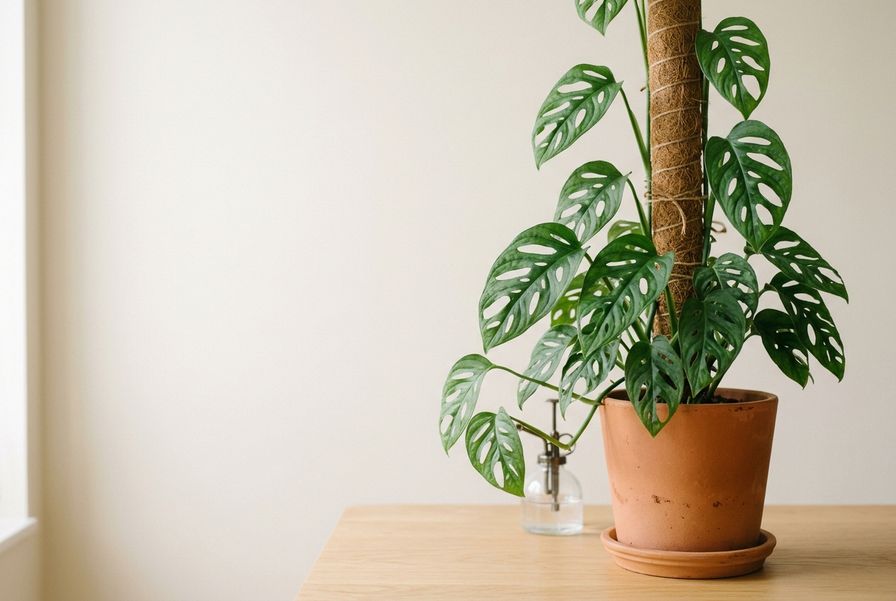
Episcia with velvety copper leaves, silvery patterning and small pink flowers in a terracotta pot, in soft natural light
Fig. 01Episcia

Episcia

Episcia cupreata (Hook.) Hanst.Family Gesneriaceae

Also known as Flame violet, carpet plant

Velvety leaves in copper, green and purple tones with pink undersides, plus little flowers that show up in warm weather. It grows fast and looks great in a hanging basket or on a bright table.

  • LightMedium to bright indirect
  • WaterKeep the soil lightly moist, leaves dry
  • HumidityHigh
  • Temperature68–86 °F (20–30 °C)
  • PetsConsidered non-toxic to dogs and cats
  • DifficultyMedium

Varieties we grow

Pink Panther
Medium-sized velvety leaves in olive green and purple with pink undersides; small pink flowers in warm weather and a slightly trailing habit, ideal for baskets.

Light

It wants brightness but never direct sun. A table near a bright window or a porch with light shade brings out its best color. With too much light the leaves fade and growth slows; with too little it gets leggy and hardly flowers.

Watering

Keep the soil lightly moist and always empty the saucer. Water at the base without wetting the leaves, because their fuzz holds water and spots appear. Use room-temperature water; cold water from the fridge leaves pale marks on the leaves.

Soil and pot

Its roots are fine and delicate, so it needs a loose, airy mix, for example with coco coir and plenty of perlite. It does well in 4–8 inch pots or in a hanging basket, where its creeping stems spill over the edges. No need to pinch it; it branches on its own.

Humidity and temperature

It loves warmth and high humidity; it's comfortable between 68 and 86 °F (20–30 °C) and flowers more when it's warm. Below 59 °F (15 °C) it suffers and the leaves get damaged. In dry rooms, set it on a tray of pebbles and water instead of misting it.

In the Dominican Republic

Our heat suits it perfectly, and with it the plant flowers for much of the year. Strong sun, however, burns the leaves quickly; outdoors, only on a well-shaded porch. Shelter it from heavy downpours, which soak the leaves and rot the stems, and bring it indoors if a hurricane is coming. Inside, keep it away from the air conditioning, which chills it and dries the air.
Also known as

Episcia
Common Spanish name
Violeta llama
Common Spanish name
Planta alfombra
Common Spanish name
Flame violet
Common English name
Carpet plant
Common English name

Common problems

  • Pale or brown spots on the leavesCold water or droplets on the leaves; water at the base with room-temperature water.
  • Faded leaves or scorched edgesToo much light or direct sun; move it to a spot with light shade.
  • Soft, dark stems at the baseRot from overwatering; let the soil dry a little, improve drainage and root the healthy tips.
  • No flowersIt needs more warmth or light; move it somewhere warmer and brighter, out of direct sun.
  • Sticky leaves or tiny silvery specksAphids, thrips or whiteflies; wash it with lukewarm water and insecticidal soap and check the undersides weekly.
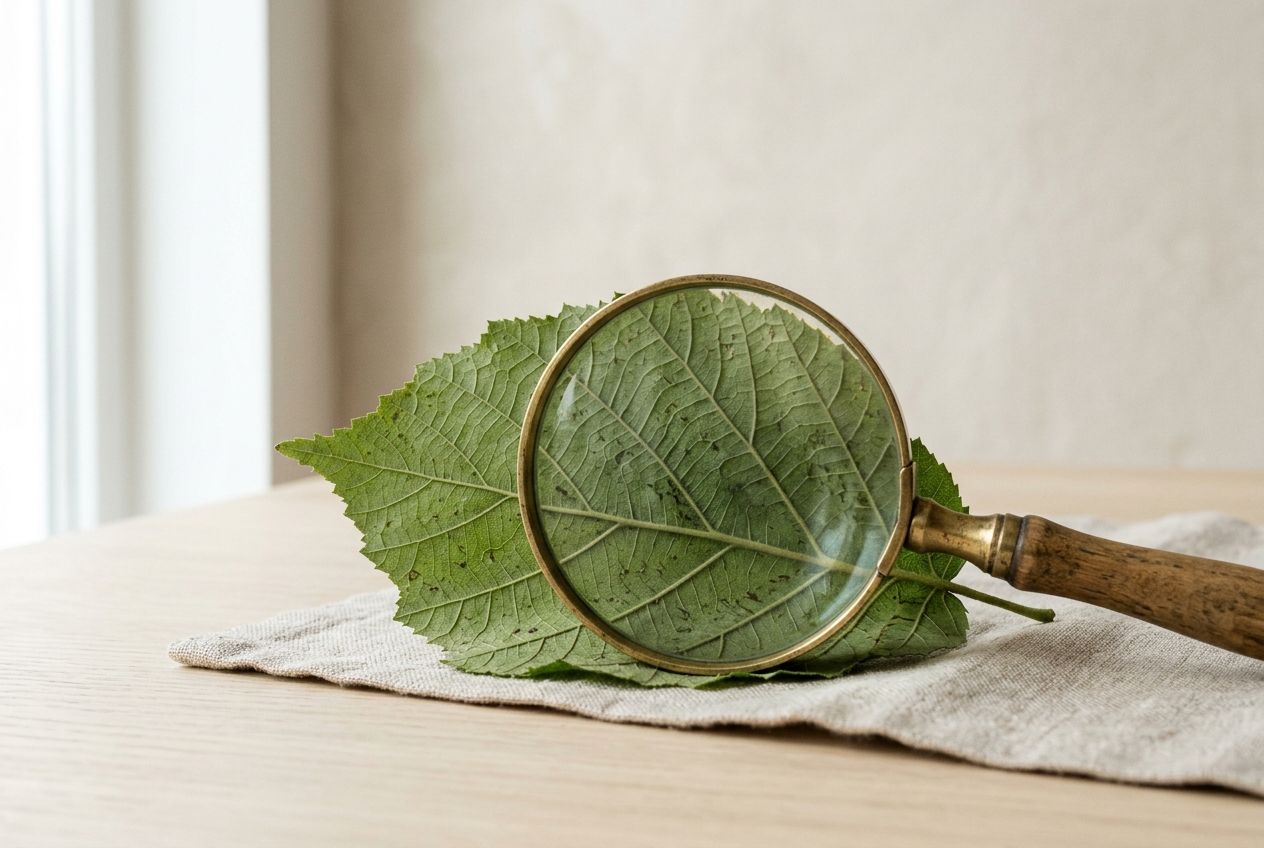
Checking the underside of a leaf with a magnifying glass
Fig. 02Check the undersides of the leaves every week.

Is your Episcia looking off?

Message the doctor
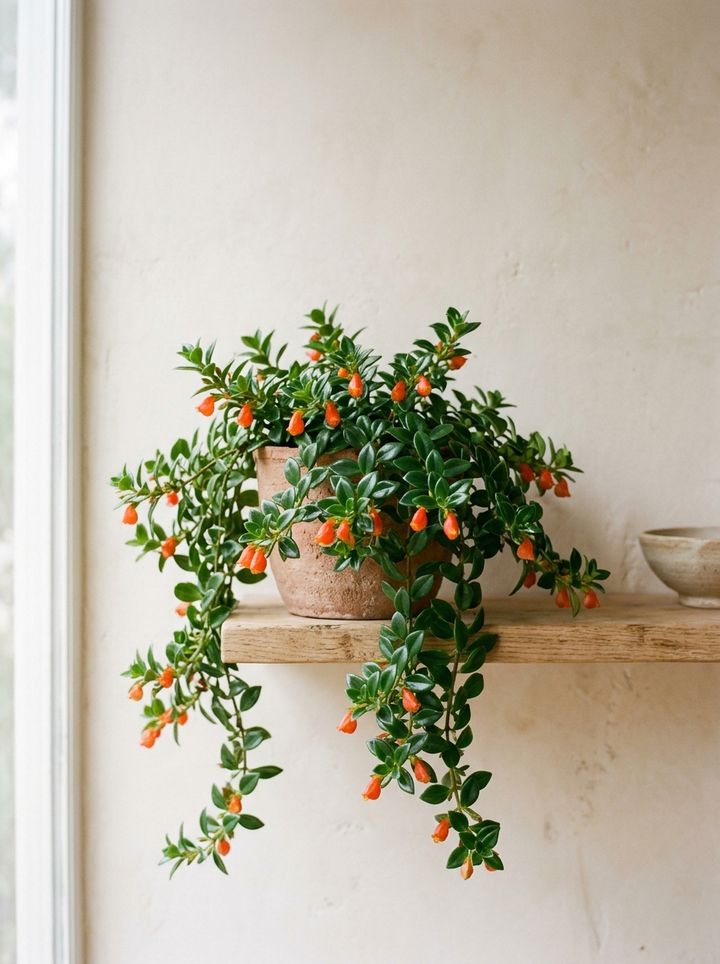
Nematanthus with small glossy leaves and orange goldfish-shaped flowers in a terracotta pot in natural light
Fig. 03Nematanthus — Nematanthus gregarius

Nematanthus

Nematanthus gregarius

Bright indirect light Pet-safe

CareModerate
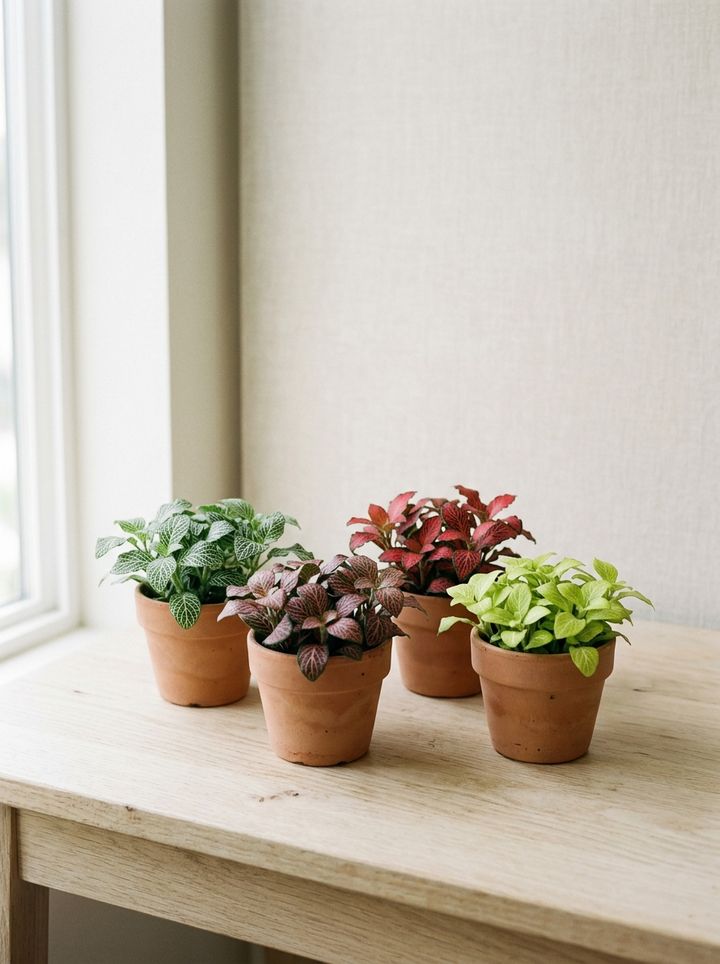
Fittonia with green leaves and pink veins forming a low mound in a small terracotta pot, in soft natural light
Fig. 04Fittonia — Fittonia albivenis

Fittonia

Fittonia albivenis

Medium light, no direct sun Non-toxic to pets

CareModerate
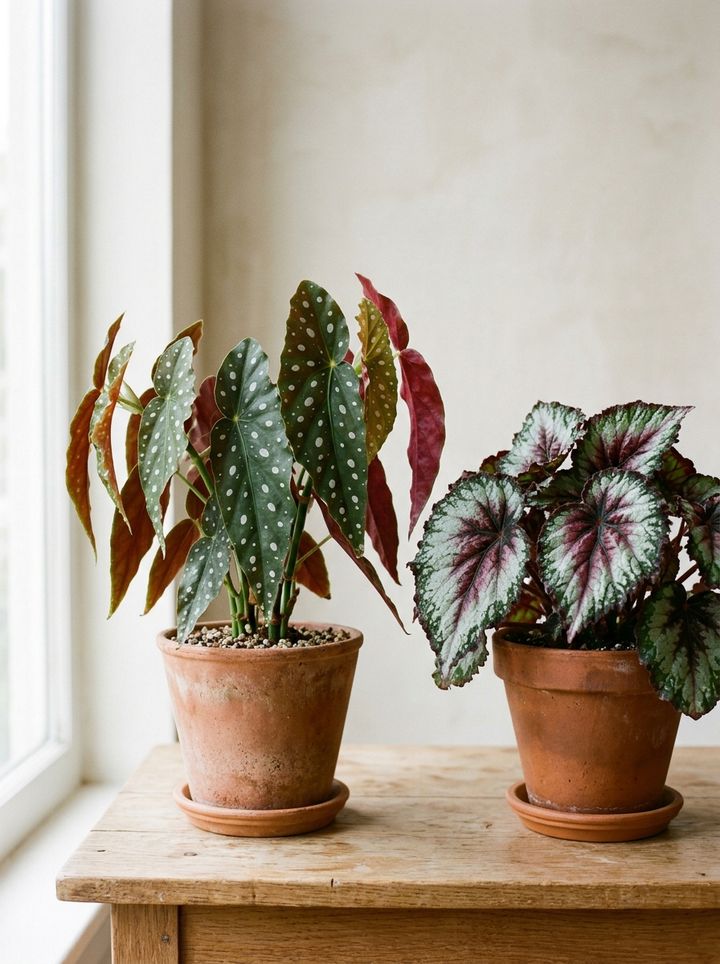
Begonia with dark green, silver-spotted leaves and red undersides in a terracotta pot, in soft natural light
Fig. 05Tropical begonia — Begonia spp.

Tropical begonia

Begonia spp.

Bright indirect light Toxic to pets

CareModerate